

Anxiety is a tricky thing. We often describe it — or even experience it — as fear.
I'm afraid I won't succeed. I'm afraid I'm not good enough. I'm afraid something is wrong.
Anxiety has a thousand faces, yet they all seem to whisper the same message: something is slipping beyond my control. Something might go wrong. Something could happen that I cannot prevent.

Fear and Anxiety: What's the Difference?
The simplest way to distinguish fear from anxiety is that fear usually relates to a specific, identifiable threat and tends to subside once the danger has passed.
Anxiety, on the other hand, is often connected to a possible or anticipated threat. It can persist for as long as uncertainty remains.
Of course, the two frequently overlap. Fear of failing an exam, for example, may be closely linked to performance anxiety.
Anxiety can also arise from very different sources. Different emotional states and inner conversations may produce remarkably similar physical symptoms.
Through the nervous system, our emotional state can trigger or intensify physical reactions: a racing heart, rapid breathing, muscle tension, weakness or trembling, digestive discomfort such as nausea, stomach cramps or diarrhoea, and, over time, sleep disturbances and difficulty concentrating.
These are much the same reactions we experience when facing genuine danger.
The difference is that, with anxiety, the threat is often not immediately present. It may exist primarily in our imagination or in our expectations of what might happen.
And when there is no clear moment at which the danger has passed, the body may remain in a prolonged state of alert.
So what feeds anxiety?
Quite often, your own mind: your past experiences, learned fears and the stories you have come to associate with certain situations.
Perhaps a particular situation carries the imprint of an unpleasant memory. Or perhaps you were taught that something was frightening or dangerous.
Children develop some of their fears through personal experience and learn others by observing the reactions of people around them. Sometimes, what they learn to interpret as a warning sign is not the situation itself, but the way an adult responds to it.
We shouldn't condemn fear. It serves an essential purpose by helping us recognise and avoid genuine danger.
What becomes harmful is prolonged fear, particularly when the source of anxiety is something we cannot simply avoid.
This can create ongoing distress, accompanied by physical symptoms that may eventually develop into chronic complaints.
And sometimes, all of this happens because your mind has attached a label marked DANGER to a situation that is not actually threatening — perhaps because of an earlier experience, or because someone important to you once experienced it as dangerous.
Every time you encounter that situation, or even anticipate it, your stress response switches on.
Anxiety can become particularly persistent when the trigger is part of everyday life — something you must face again and again.
The Stories Behind Anxiety
Physical symptoms alone cannot tell you exactly what you are anxious about.
If you want to help yourself, whether during an acute episode or with a more persistent pattern of anxiety, you first need to understand what lies behind it.
What triggers your anxiety? What keeps it going? And what might genuinely help you?
Let's explore six common patterns.
1. Performance Anxiety
What if I fail? What if I don't succeed? What if I'm not good enough?
For some people, every day at school or work can become a source of anxiety.
Behind performance anxiety, we may find earlier experiences of failure, parental expectations, demanding teachers or other influential people who set exceptionally high standards — sometimes for themselves as well as for others.
Perfectionism and unrealistic expectations often accompany this pattern.
Your sense of self-worth may become so closely tied to achievement that every task feels like a test of your personal value.
2. Social Anxiety
What if they reject me? What if I embarrass myself? What will they think of me?
Social anxiety can prevent you from showing your true personality in social situations.
You may hesitate to speak, while insecurity reveals itself in your words, movements or posture.
You hide parts of yourself because you fear that others will not appreciate or accept the person you really are.
Sometimes you may even anticipate ridicule, criticism or outright rejection when there is little reason to expect it.
In more severe cases, social anxiety can interfere with everyday activities, including attending school or going to work.
3. Anticipatory Anxiety
This is the anxiety that develops when you know you will soon face a situation you find frightening.
It might be an examination, a journey, a medical appointment or an important conversation.
Your mind magnifies the potential threat and projects it onto the approaching event.
An unfavourable outcome begins to feel increasingly likely.
And as the day draws closer, anxiety intensifies — often accompanied by disturbed sleep, digestive problems and difficulty concentrating.
4. Anxiety About Losing Control
Sometimes anxiety arises when the outcome of a situation is no longer in your hands.
Your future, your success or an important decision may depend on someone else.
You have done everything you could. Now you must wait for the other person to decide.
You cannot influence the result anymore.
Yet you check your messages every few minutes, gather every possible piece of information and perhaps even consult the stars about what might happen.
None of this necessarily makes you any wiser.
But it can certainly make you more anxious.
5. Relationship Anxiety
Relationship anxiety may involve a persistent fear of losing someone you love, of being abandoned or of no longer being loved.
Sometimes the intensity of this fear is disproportionate to what is actually happening.
It can trigger powerful emotions and reactions.
All it may take is an unanswered phone call or a slightly unfamiliar tone of voice from someone important to you.
Suddenly, your mind begins creating stories about what it might mean.
6. Health Anxiety
With health anxiety, even a minor physical change or symptom can trigger intense worry.
This pattern is particularly tricky because anxiety itself can cause physical sensations.
Your heart may beat faster. You may feel short of breath or find yourself sighing repeatedly.
These sensations then become further reasons to worry, creating a vicious circle.
Physical symptoms and the fear they provoke can reinforce one another.

Aromatherapy: Finding the Right Essential Oil for Your Anxiety
If you are familiar with essential oils, you can probably name ten that are commonly recommended for anxiety.
But which one is right for you?
Which scent might help ease your tension, redirect your attention or give you a little courage when you need it most?
When choosing essential oils, it is worth considering more than physical symptoms alone.
Your emotional state, the patterns maintaining your anxiety and your personal relationship with different scents all matter.
Here are some possibilities to explore, drawing on traditional aromatherapy, emotional profiles of essential oils and individual therapeutic experience.
When Perfectionism and Past Failures Hold You Back
If you are a perfectionist whose self-esteem has suffered because of previous failures, bergamot may be a helpful choice, particularly when anxiety is accompanied by sleep difficulties or tension-related discomfort.
Cypress can complement it, especially when the challenge is letting go of the past rather than allowing old disappointments to define the present.
When You Carry Your Family's Fears
Lemon balm (Melissa) is traditionally valued for its calming qualities.
It is also an interesting choice within emotional aromatherapy for people who feel trapped by limiting beliefs.
I'm not good enough.
Nobody in our family has ever achieved that.
People like me don't get opportunities like that.
I don't deserve it.
We often absorb our family's beliefs and anxieties almost without noticing.
Perhaps you cannot even explain why certain situations make you anxious. You simply know that your parents, grandparents or siblings have always responded in much the same way.
Several essential oils are associated with different aspects of inherited family patterns:
Douglas fir: unhealthy attachment to family traditions and expectations.
Scots pine: destructive behavioural patterns or experiences of abuse within the family history.
Petitgrain: inherited mental patterns that restrict authentic self-expression.
If your anxiety is connected to a clearly identifiable event in the past, copaiba may also be considered as a component of a personalised blend.
When You Fear Public Speaking
For people who become anxious before speaking in public, spearmint may be an interesting option when difficulty concentrating is the main problem.
Lavender may be more appropriate when anticipatory anxiety is accompanied by sleep disturbances.
When You Feel You Must Please Everyone
Coriander essential oil is associated in emotional aromatherapy with patterns of excessive people-pleasing.
It may be worth exploring when social anxiety, performance anxiety or fear of losing control is closely linked to the need for approval.
When excessive self-criticism, low confidence and fear of rejection dominate, cubeb pepper may be another component to consider.
When You Constantly Compare Yourself with Others
Some people dread comparison because their inner critic has already decided they will come out worse.
For this pattern, emotional aromatherapy associates pink pepper with the challenge of self-judgement.
Black pepper, meanwhile, may be relevant when the need to please others and a lack of confidence push you into playing a role rather than being yourself.
When Relationships Feel Unsafe
Frankincense is another essential oil traditionally associated with emotional support.
It may be particularly interesting in relationship anxiety when the underlying experiences involve abandonment, attachment difficulties, earlier relationship trauma or unresolved wounds connected to a parent.
When Anxiety Steals Your Joy
Some people become so controlled and self-restrained by anxiety that they lose their spontaneity, creativity and playfulness.
For them, sweet orange essential oil may feel like a little liberation.
In this emotional profile, tension may also be accompanied by constipation rather than diarrhoea.
Tangerine is associated with a somewhat different pattern: rigidity, excessive rule-following and the belief that everything will turn out well only if you can keep yourself and everyone around you under complete control.
Compulsive tidiness, anyone?
When You Have Lost Your Sense of Security
During a crisis, or when stable foundations and meaningful emotional connections seem to be missing, vetiver may be a valuable component of an aromatherapy blend.
Its deep, earthy fragrance is strongly associated with grounding and stability.
It is also remarkably intense, so a tiny amount can go a long way.
When You Can No Longer Relax
For people whose anxiety makes it difficult to relax and experience genuine pleasure, ylang-ylang may be worth exploring.
In traditional aromatherapy, it is associated with sensuality, emotional openness and freedom.
This makes it particularly interesting when anxiety also interferes with intimacy.
A Few Words Before You Choose
This is not a recipe book. Think of it as a collection of ideas to help you recognise the emotional patterns behind your anxiety and explore which essential oils might suit you.
Here is a tip.
If you recognise yourself very clearly in the description of a particular oil, try experiencing its aroma on its own first.
Notice how you respond before including it in a blend.
These suggestions refer to inhalation and diffusion. Essential oils should only be taken internally under appropriate professional guidance.
And remember: an aroma that feels comforting to one person may be unpleasant to another.
Your personal response matters.
Bach Flower Remedies: Looking Beyond the Symptoms
We have explored the difference between fear and anxiety, the possible consequences of prolonged anxiety and some of the ways essential oils can be used for emotional support.
Now let's turn to another approach: the Bach flower remedy system.
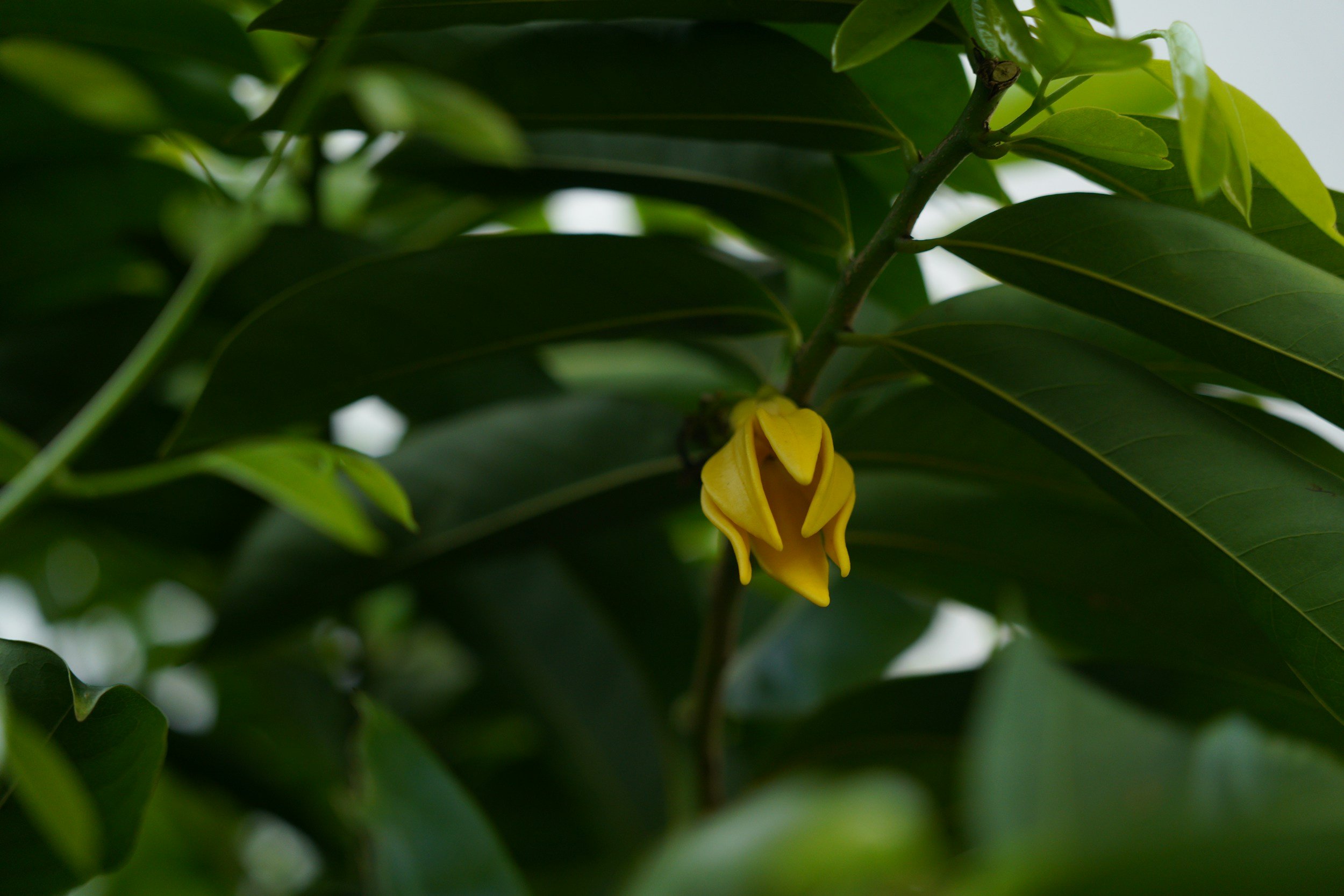
Developed by Dr Edward Bach, this system consists of 38 flower remedies, each associated with a particular emotional state or pattern.
Several are traditionally selected for different forms of fear, worry and anxiety.
As we have already seen, these experiences can overlap.
You may recognise yourself in more than one description.
Within the Bach system, remedies can be combined according to the individual's emotional picture. I generally recommend choosing no more than five or six remedies in a blend. If one or two describe your situation particularly accurately, there may be no reason to add more.
Mimulus — When You Know Exactly What Frightens You
Some people are so afraid of particular situations that they do everything possible to avoid them.
They know precisely what they fear.
Within the Bach system, Mimulus is associated with identifiable, specific fears.
When these fears are rooted in low confidence or poor self-esteem, Larch may be a useful companion.
Aspen — When You Feel Something Bad Is Going to Happen
Other people experience anxiety without being able to identify its cause.
There is an uneasy feeling, a sense of foreboding, an expectation that something bad is about to happen.
They cannot explain what.
They simply feel that something is wrong.
Aspen is the Bach remedy traditionally associated with these vague, unexplained fears.
If someone hides this inner uneasiness behind a cheerful, carefree exterior, Agrimony may complement the emotional picture.
Cherry Plum — When You Fear Your Own Reactions
Some people are afraid of their own anger or emotional intensity.
They worry that expressing themselves honestly and spontaneously could have serious consequences.
On the outside, they may appear perfectly calm — almost Zen-like.
Inside, however, emotions may be boiling.
They are afraid to show them.
Cherry Plum is traditionally associated with the fear of losing control over one's emotions or behaviour.
If the same person also feels compelled to accommodate everyone else's wishes, Centaury may be worth considering.
Rock Rose — When Fear Becomes Terror
Rock Rose is associated with panic, terror and overwhelming fear.
In these moments, the emotional reaction can feel far greater than the actual danger.
Someone prone to panic may choose to keep Rescue Remedy close at hand.
This traditional Bach crisis blend contains five flower remedies and is intended for moments of acute emotional distress.
In severe or recurring panic disorder, flower remedies may be used as a complementary approach, but they do not replace psychotherapy or medical treatment.
Red Chestnut — When You Worry About Everyone Else
Some people are not primarily anxious about themselves.
They are constantly worried about the people they love.
They imagine accidents, illnesses or other terrible things happening to family members or friends.
Red Chestnut is the classic Bach remedy associated with excessive worry for others.
If that worry escalates into overwhelming fear, Rock Rose may also fit the emotional picture.
Star of Bethlehem — When the Past Still Hurts
When anxiety is connected to earlier shock, loss or traumatic experiences, Star of Bethlehem may be considered as part of a Bach flower blend.
Its traditional emotional profile is associated with the aftermath of shock and emotional trauma.
Larch and Pine — When You Fear Failure
For performance anxiety, two remedies may be particularly relevant.
Larch is associated with lack of confidence and the expectation of failure.
Pine relates to guilt and self-blame, which may accompany performance anxiety.
The distinction matters: fearing failure is not the same as blaming yourself for everything that goes wrong.
Gentian and Gorse — When You Expect the Worst
Sometimes anxiety is rooted in a deeply pessimistic outlook.
You may expect things to go badly before they have even begun.
If even a small setback discourages you and undermines your confidence, Gentian may fit the emotional pattern.
But when repeated disappointments have led to a deeper loss of hope — when you no longer believe things can improve — Gorse is the traditional Bach choice.
Understanding Your Anxiety Is the First Step
This article is not a quick-fix manual.
It is a collection of perspectives intended to show you that anxiety is personal, and that finding the right support requires an individual approach.
The same physical symptoms can hide entirely different emotional stories.
What matters is not simply finding something that makes the symptoms disappear.
It is understanding what your anxiety means to you.
What are you afraid of losing?
What are you trying desperately to control?
Which expectations are truly yours, and which have you inherited from others?
And what do you actually need?
Try not to see your anxiety as an enemy.
Instead, become curious about what it may be telling you.
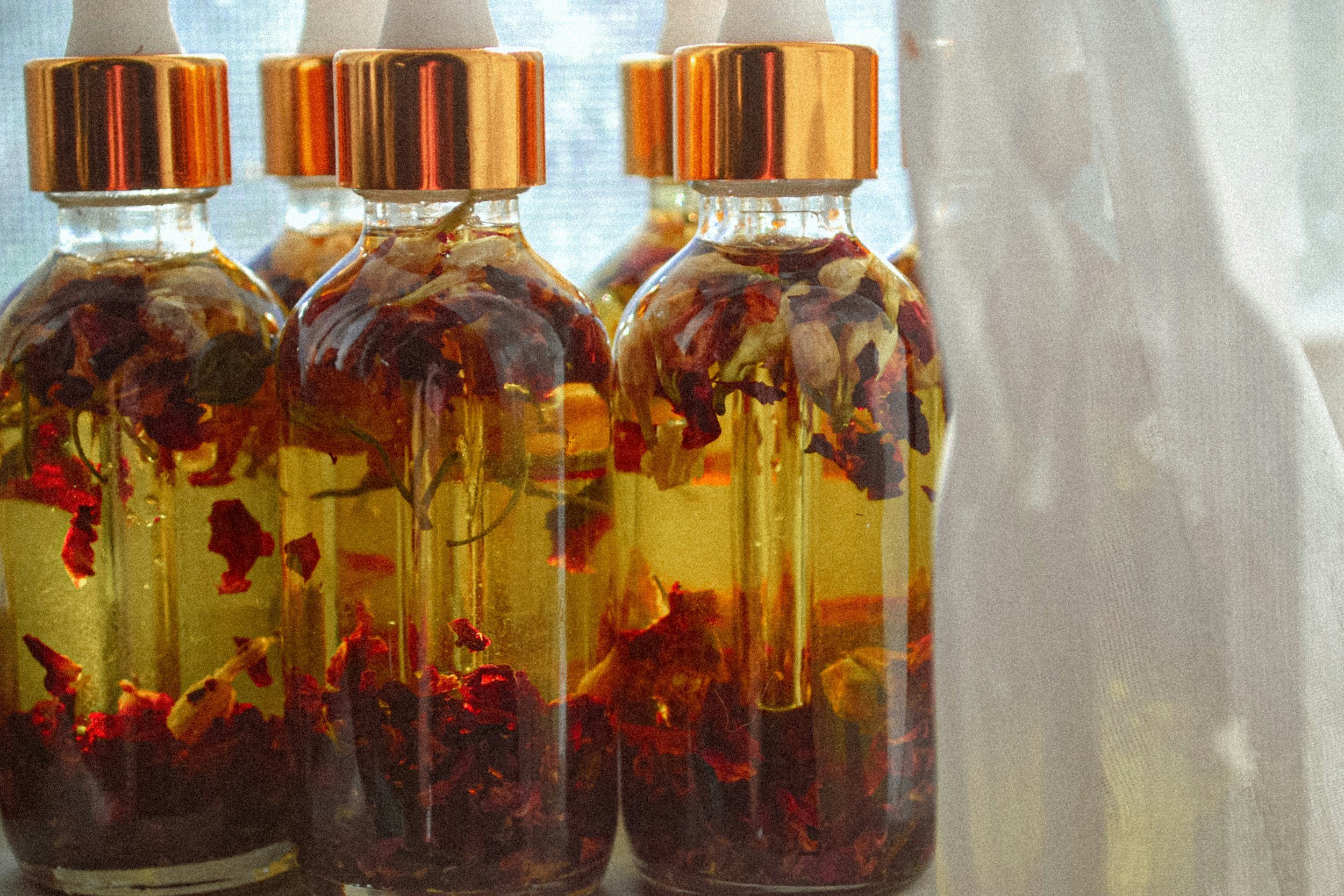
Aromatherapy offers one way of approaching emotional wellbeing through our sense of smell and its connections with the nervous system. The Bach flower system offers another framework for recognising and working with emotional patterns.
The two approaches can also be used together when their individual profiles resonate with your experience.
Perhaps the most important step is to stop fighting only the symptoms and begin paying attention to the story behind them.
If you would like to learn more about natural self-care and holistic approaches to wellbeing, explore the DandeLion blog and subscribe to the newsletter.